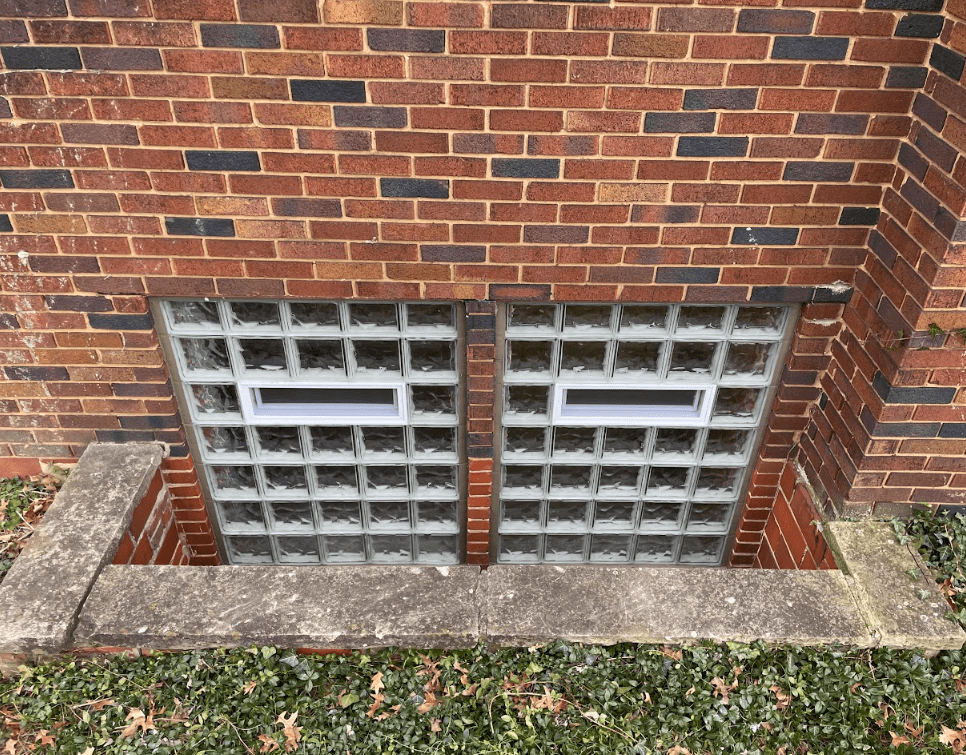
Glass block window cost in Ohio depends on the number of openings, panel size, room type, vent choice, custom dimensions, opening condition, and the installation method. A measured estimate is the most reliable way to price a job accurately, because a single basement laundry window, a tiled bathroom panel, and a multi-window basement replacement do not share the same labor or materials.
How much do glass block windows cost in Ohio?
Glass block window cost varies by project, so a measured quote is the right way to price it. A single basement opening, a bathroom window, and a multi-window basement job do not have the same labor or materials.
Steel-frame removal, block-foundation conditions, and a vent block each shape the price in a clear direction. A standard basement opening with a hopper vent prices differently from a bathroom panel with a frosted privacy pattern.
Key cost drivers:
- Number of windows on the same job
- Size of each opening (height x width)
- Hopper vent, slider vent, or dryer vent block
- Steel, wood, or aluminum frame condition
- Mortar-set perimeter installation
- Cleanup and old-frame handling
Online “average” prices often reflect kit-only installs or single-block work, so a measured Ohio quote is the most accurate way to price your project.
What affects the price of basement glass block windows?
Basement glass block window price is shaped by access, opening condition, vent choices, and how much old material has to come out. The basement is also where moisture control matters most, so the perimeter detail is part of the price.
An older steel buck pulled from a vintage block wall takes longer than a clean wood frame in a newer poured wall. That labor difference shows up directly in the quote.
The estimate accounts for:
- Steel frame cutting versus wood frame removal
- Block or poured-concrete foundation prep
- Hopper, slider, or dryer vent block selection
- Mortar-set perimeter sealing on all four sides
- Debris haul-away and final exterior cleanup
For service details, the basement glass block windows page is the natural next step.
Do bathroom or shower windows cost more?
Bathroom and shower glass block windows often cost more per opening because water-management, privacy patterns, tile transitions, and tight access add labor. The panel has to handle moisture from inside the room and weather from outside.
A wave or icescape pattern, a sloped sill detail, and coordination with tile mean the bathroom job is a thoughtful upgrade. If the existing wood frame is older and weathered, the wall around the opening may benefit from light repair before the new panel is set.
Bathroom-specific cost factors:
- Privacy pattern (wave, frosted, icescape)
- Tile or shower-surround tie-in
- Sill slope and water-management membrane
- Optional small hopper vent for shower steam
- Interior trim repair after install
A bathroom window is quoted as part of a wet-area system, not just a glass panel.
How do vents and dryer vents affect cost?
Vents and dryer vents are itemized on the estimate because they shape the panel layout and add hardware that is sealed individually. The estimate explains how each vent type is priced.
Dryer vent blocks matter most in basement laundry rooms, mechanical rooms, and any space where the dryer exhaust runs through the window. Planning the vent during the original install is the easiest way to get a clean dryer duct path.
Vent options on a measured quote:
- Hopper vent for general basement airflow
- Slider vent in tight or short panels
- Dryer vent block sized to the existing duct
- Vent screen or storm cover where exposed
- Future replacement access for the vent insert
For common vent layouts, see the basement guide.
Is glass block cheaper than vinyl?
Glass block and vinyl serve different goals. A vinyl basement window is operable and may be the better fit when full airflow is the main goal.
Glass block is fixed and mortar-set. For a basement window where privacy, forced-entry resistance, and low maintenance matter more than full operation, glass block is often the right fit. Compare the two on long-term use, privacy, maintenance, vent needs, and whether the room needs the window to open.
Where the comparison usually lands:
- Forced-entry resistance: glass block has an advantage with a fixed mortar-set perimeter
- Privacy: glass block has an advantage with patterned obscure blocks
- Operability: vinyl has an advantage where full airflow is the main goal
- Maintenance: glass block has fewer moving parts to service
- Bedroom egress: an egress window is a separate product designed for sleeping rooms
For basement bedrooms, an egress window is the right product since sleeping rooms need an emergency escape opening.
Why should homeowners get a measured quote?
A measured quote sets clear expectations on size, vent fit, frame condition, and access. It also lets the installer explain what is included before any work starts.
A mortar-set perimeter is what makes the panel feel solid and permanent. Ask the estimator to explain the installation method, how the perimeter will be sealed, and what product or service documentation you receive after the work is finished.
Confirm before approving the scope:
- Panel dimensions (height x width)
- Vent type and location in the panel
- Old frame handling
- Mortar-set perimeter on all four sides
- Cleanup, finish, and a final walkthrough
A clear quote should make the final project easy to understand before you approve it.
What should you have ready before asking for a quote?
You do not need construction drawings, but a few photos and rough measurements make the first call useful. Take pictures from inside and outside. Show the current frame, the well if there is one, and anything around the access path.
Note the room use. A basement laundry window, a bathroom window, a garage window, and a finished-basement living-area window each call for a different panel layout. If the room has humidity, odors, laundry exhaust, or shower use, mention that during the estimate so the installer designs the panel around the real need.
Does Glass Block HQ offer financing?
Glass Block HQ has a financing page for current project payment options. Review /financing/ or ask during your estimate so the payment details come from the current published source.
Are glass block windows worth it long-term?
Glass block windows are a strong long-term upgrade for older basement, bathroom, or garage openings. A fixed glass block panel has fewer moving parts than a standard operable window, which keeps maintenance simple.
Buyers and inspectors notice when basement windows have been refreshed with a clean, sealed panel. A finished glass block opening reads as a planned upgrade.
Use the article to understand what shapes the scope, then use a measured quote to decide what your project needs.
Frequently Asked Questions
Can I get a price without an in-home measurement?
A rough scope can be discussed from photos, but the final price depends on measurements and opening condition. A site visit is usually the fastest path to a firm number.
Do dryer vent blocks affect the price?
Dryer vent blocks include the block, the louver, and the duct alignment in the planning. The estimate itemizes the vent so you can see what is included.
Should I ask about product documentation?
Yes. Ask what documentation comes with the project and what it says about materials, installation, and follow-up. Keep those records with your home files after installation.
Can one quote include basement and bathroom windows together?
Yes. Quoting all openings in one visit is usually more efficient and may reduce per-window labor compared with separate trips.
Get a Free Estimate from Glass Block HQ
If you are replacing old windows or planning a custom glass block project, a measured estimate answers the practical questions fast. Glass Block HQ can review the opening, vent needs, room use, and installation method before you make a decision. Start at /get-a-quote/ and request a free estimate.