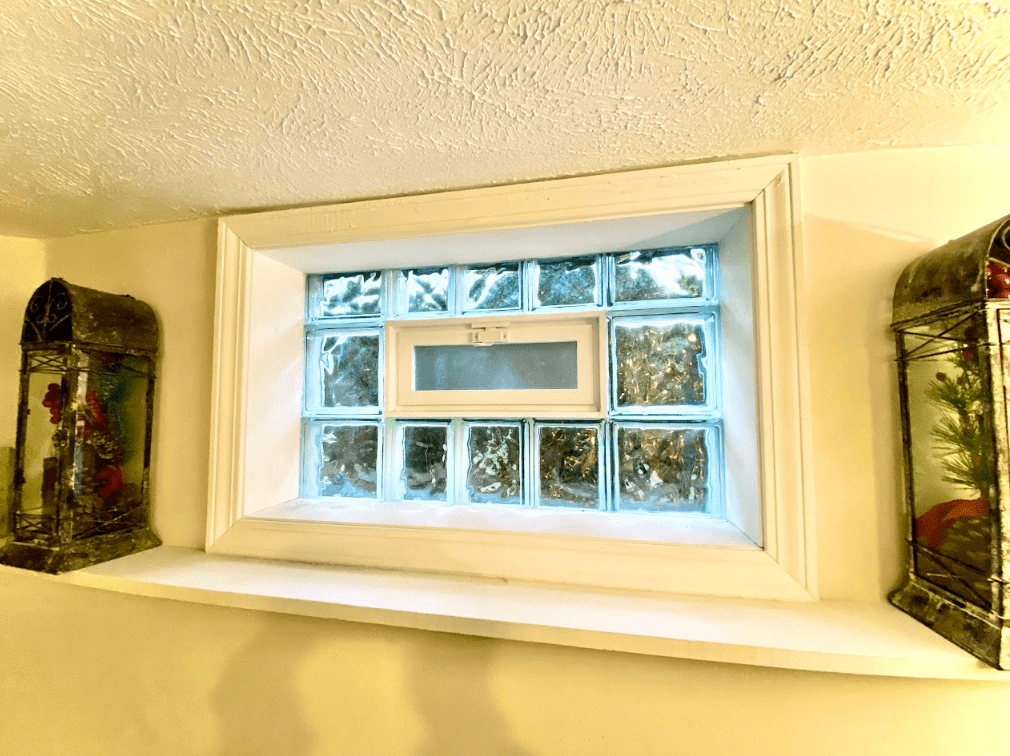
Vented glass block windows add airflow to a fixed, privacy-focused glass block panel. They are common in basement laundry rooms, bathrooms, mechanical rooms, and utility spaces where you want fresh air without switching back to a standard operable window.
What is a vented glass block window?
A vented glass block window is a glass block panel with a small operable insert built into the layout. It gives you airflow while keeping the rest of the panel fixed and private.
The insert sits inside the block pattern instead of replacing the whole window. Vent size varies by product and opening, so the estimate should identify the actual insert being used.
Common vent options:
- Hopper vent: tilts inward from a top hinge for general airflow
- Slider vent: opens horizontally where panel height is limited
- Dryer vent block: dedicated louvered block for dryer exhaust
- Combination panel: hopper plus a separate dryer vent block on the same window
Each option seats inside a mortar-set frame so the perimeter stays sealed.
Do glass block windows open?
The glass blocks themselves do not open, and vented glass block windows include an operable hopper or slider insert. That insert provides controlled ventilation while the rest of the panel stays fixed and secure.
A hopper vent latches from inside the room. When the latch is closed, the panel reads from the outside as a solid wall of glass block.
What the insert gives you:
- A controlled opening for airflow
- A latch that operates from the inside only
- An aluminum-framed screen on most hopper inserts
- Strong forced-entry resistance compared with many full-size operable basement windows
- Quiet, fixed-feel privacy across the rest of the panel
For sleeping rooms that need emergency escape, an egress window is the right product on a separate page.
How do vented glass block windows support privacy?
Vented glass block windows support privacy and forced-entry resistance when the vent size, latch, and perimeter installation are matched to the opening. The vent is one part of the panel, so the whole assembly is planned together.
The vent is treated as part of the window layout from the start. Ask how the panel will be set, how the perimeter will be sealed, and how the vent will operate from inside the room.
Details to confirm at the quote:
- Vent style
- Interior-only latch with no exterior handle
- Perimeter setting and sealing method
- Solid block units around the vent
- Screen condition and replacement availability
A vent adds airflow while keeping privacy, sealing, and operation clear.
Where should homeowners use vents?
Vents matter most in basement laundry rooms, mechanical rooms, workshops, and any space where the dryer exhaust runs through the window. Bathrooms and finished basements with persistent humidity are also strong candidates.
In a dry storage basement, or a room where the strongest possible privacy without any operable hardware is the goal, the vent can be skipped.
Common use cases:
- Basement laundry: dryer vent block plus optional hopper for steam
- Mechanical or boiler room: hopper vent for makeup air
- Workshop: hopper vent to clear fumes
- Basement bathroom: small hopper near the ceiling for steam relief
- Walk-out finished basement: vent for shoulder-season airflow
Not every glass block window needs a vent. Put vents where airflow has a real job.
Can old vents be replaced?
Old vents can often be replaced without rebuilding the whole panel when the surrounding blocks and mortar joints are sound. A measured visit confirms whether the existing panel can hold a new insert or whether a fresh window is the smarter upgrade.
What the installer checks first:
- Surrounding block condition
- Mortar joint condition around the vent
- Sill condition under the vent
- Latch wear on the existing insert
- Whether the new vent matches the legacy opening dimensions
When the existing panel is in solid shape, a vent swap is straightforward. When it is showing age, a fresh panel is the cleaner upgrade.
How do vents affect cost and maintenance?
Vents are itemized on the estimate based on hardware, layout planning, and individual sealing. A hopper vent is the simplest add. A dryer vent block adds the louver assembly. A panel with both is the most complete option.
Maintenance is simple. Wipe the vent and screen at the same time you clean the window, check the latch once a year, and refresh the screen as needed. The dryer vent block has a louver that swings freely and closes when the dryer is off.
Maintenance routine:
- Wipe down the panel and vent screen with mild soap
- Check the hopper latch for free movement
- Confirm the dryer vent louver closes fully when idle
- Glance at the sill during routine cleaning
- Call for a follow-up visit if anything feels different
If ventilation matters, plan the vent during the original installation for the cleanest result.
What patterns work with a vent?
Most privacy patterns can include a vent without losing privacy on the rest of the panel. Wave, icescape, and decora patterns all work around a hopper or dryer vent block.
Pattern picks based on the room:
- Wave: balanced privacy with strong daylight, common in bathrooms
- Icescape: stronger privacy with a frosted look, common in basement-near-walkway windows
- Decora: high privacy with the most diffusion, good for ground-level basements
Ask the estimator to show the pattern in person if the window faces a sidewalk, driveway, or neighbor.
What should you prepare before asking for a quote?
Before you ask for a quote, take photos from inside and outside and note how the room is used. A basement laundry window, bathroom window, workshop window, and mechanical-room window can all need different vent planning.
The estimator should know whether you want occasional airflow, dryer exhaust, humidity relief, or just a small operable insert for seasonal ventilation. Those are different goals. If a dryer is involved, the duct path matters as much as the block pattern because the vent has to connect cleanly to the appliance exhaust.
Also mention an older frame, tight exterior access, or a finished wall around the opening. Those conditions can affect the scope even when the finished glass block panel looks simple.
What details should be written into the estimate?
A clear estimate should explain the panel, the vent, the opening prep, and the installation method. It should say how the old frame is handled, what vent style is included, how the perimeter will be sealed, and what cleanup is part of the project.
When comparing vented glass block quotes, look at the vent specifics. One quote may include a hopper insert. Another may include a dryer vent block. The written scope describes exactly what is included so the comparison is apples-to-apples.
Ask what is excluded too. Painting, unusual wall finishes, duct changes, or work outside the window opening may be handled separately depending on the home. Clear inclusions and exclusions keep the project predictable.
What should you check after installation?
After installation, open and close the vent before the crew leaves. Confirm the latch works, the screen sits correctly, and the panel looks clean from inside and outside.
If the window includes a dryer vent block, check that the duct path lines up and the louver can move. If the window is for humidity relief, ask how to clean the screen and what normal maintenance looks like. Keep the estimate and any care instructions with your home records so future service questions start from accurate information.
Frequently Asked Questions
Can every glass block window include a vent?
Most can, but very small openings may limit vent choices. The panel layout has to leave enough block around the insert to keep the perimeter strong.
Does a vent reduce privacy across the whole panel?
Only slightly. The blocks still provide privacy, and the vent is a small portion of the panel.
Can a dryer vent block be added to an existing glass block window?
Sometimes, but it is easier to plan during the original installation. Retrofitting depends on panel condition and vent location.
Do vents help with basement humidity?
They help with airflow as part of a healthy basement plan. For higher humidity, a dehumidifier or exhaust fan can support the vent.
Get a Free Estimate from Glass Block HQ
If you are planning a vented glass block window or replacing an old vent insert, a measured estimate answers the practical questions fast. Glass Block HQ can review the opening, the vent type, and the existing duct path before you make a decision. Start at /get-a-quote/ and request a free estimate.