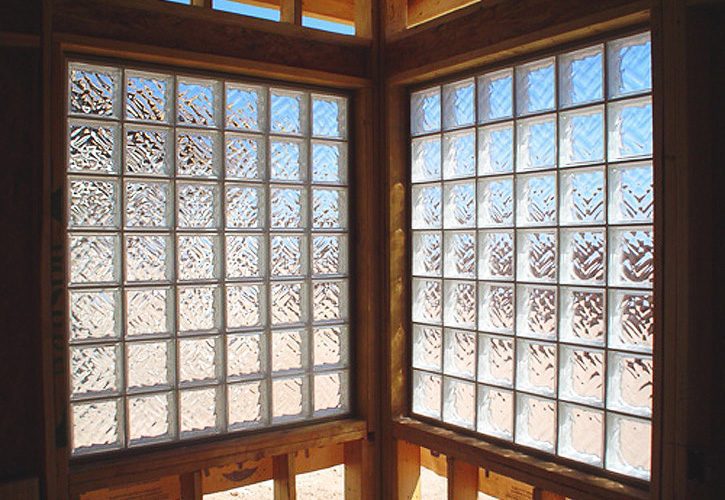
Premade vs. Custom Glass Block Windows: What Fits Your Home Best?

Standard panel sizes fit most basement and bathroom openings cleanly; custom panels solve odd shapes and historic openings. Here is the trade-off.

Premade glass block windows can be useful, but the right fit depends on the actual opening. Older Ohio basements, bathrooms, and garages often need custom sizing, vent planning, or experienced opening prep so the panel fits properly.

What are premade glass block windows?

Premade glass block windows are panels assembled at the shop or factory before they are delivered to the job site. They can save time on installation, but they still have to fit the opening and be installed correctly into the wall.

Most “premade” panels are built to a stock size with a chosen pattern and an optional vent. The installer brings the finished panel to the home and sets it into a prepped opening.

What is usually built into a premade panel:

  • Stock width and height
  • One block pattern across the panel
  • One vent location, if a vent is included
  • A perimeter ready for mortar-set installation
  • A bonded panel that ships as one piece

The panel is finished. The opening still needs prep, the perimeter still gets mortar, and the cleanup is part of the install.

Are most glass block panels prefabricated?

Most glass block panels in Ohio basement and bathroom installs are prefabricated to a measured size. That does not mean every job is one-size-fits-all. The shop builds the panel to your opening, the installer mortar-sets it into the wall, and the perimeter is tooled by hand.

Prefabrication speeds up installation day and protects panel quality. The custom work happens in the measurement and the perimeter detail, not in stacking blocks at the basement window.

Where prefabrication is doing its job:

  • Consistent block alignment and pattern
  • Pre-tooled mortar joints between blocks
  • Pre-installed vent insert with screen and latch
  • Smooth install-day handling for the panel itself
  • Faster overall project schedule

The panel can be prefabricated and still measured, sized, and customized to your opening.

When do you need custom sizing?

Custom sizing applies when the opening is unusual, out of square, smaller than a stock panel, or needs a vent in a specific location. Older Ohio basement openings often benefit from a panel built to the measured size.

A right-sized custom panel matches the actual opening, so the masonry stays as designed.

Situations that call for custom panels:

  • Older block foundations with non-standard openings
  • Bathroom windows with tile already on the wall
  • Garage openings cut for a specific size
  • Dryer vent placement that aligns with an existing duct
  • Out-of-square openings that benefit from careful planning

A measured opening drives the panel for the cleanest fit.

Can vents or dryer vents be added?

Vents and dryer vents are added during panel build, not at the site. The vent location, type, and size have to be planned before the shop assembles the blocks.

A hopper vent in the lower-right corner of the panel is a different build than a dryer vent block in the lower-left. The shop needs the location call before fabrication starts.

Vent details that have to be specified:

  • Hopper vent versus slider vent versus dryer vent block
  • Vent location relative to the duct or dryer position
  • Screen and latch options
  • Whether the panel needs two separate vents
  • Pattern coordination around the vent block

The vented window guide covers vent options in more detail.

Why does professional fitting matter for older basement openings?

Professional fitting matches the panel to the actual opening so the install lands clean. Older Ohio basement openings often have unique sizing, and a measured visit is the easiest way to confirm the right approach.

A professional install handles old-frame removal, opening prep, panel setting, and a mortar-set perimeter as one continuous process.

What professional fitting brings:

  • Old steel buck handling and clean removal
  • Opening prep down to sound masonry
  • A custom or stock panel sized to the actual opening
  • A mortar-set perimeter on all four sides
  • A clean perimeter ready for finished masonry

A measured visit confirms the right fit before any panel is built.

What should homeowners measure before calling?

Measure the rough opening width and height from the inside, then take photos from inside and outside. The estimator will confirm the dimensions on the visit, but a starting measurement makes the first call more productive.

Measure to the nearest quarter inch. Use a tape inside the opening, against the masonry, not against the existing window frame.

Useful prep before the estimate:

  • Inside width measurement at the top, middle, and bottom
  • Inside height measurement at the left, middle, and right
  • Frame material (steel, wood, vinyl, or aluminum)
  • Vent need (none, hopper, slider, or dryer)
  • Photos of the wall around the window inside and outside

Basic measurements help the first conversation. Professional measurements protect the final fit.

When is custom worth the extra planning?

Custom is worth it when the opening is non-standard, the room use is specific, or the install coordinates with tile, dryer ducts, or finished wall surfaces. The planning time is paid back by a panel that fits the wall.

For a clean, square stock-size basement opening with no vent and no special pattern, a stock prefab panel is the right call. For a non-standard opening with a dryer vent and a wave pattern, custom is the answer.

Frequently Asked Questions

Are premade panels lower quality than custom?

No. Quality depends on the panel build, the materials, and the installation method, not on whether the panel is stock or custom. A prefab panel mortar-set into a clean opening lasts a long time.

Can I buy a panel and have it installed?

Ask first. Many installers prefer to supply the panel so they can stand behind both the fit and the installation method.

Do custom panels take longer to deliver?

Custom panels usually add a few days to the schedule because the shop has to fabricate to measured dimensions. The estimator can give a delivery range during the visit.

Are glass block patterns customizable?

Yes. Wave, icescape, decora, frost, and other patterns can be specified during the build. Ask which patterns are available for your opening and how each pattern affects privacy.

Get a Free Estimate from Glass Block HQ

If you are deciding between a premade and a custom glass block window, a measured estimate answers the practical questions fast. Glass Block HQ can review the opening, recommend stock or custom, and explain the vent and pattern options before you decide. Start at /get-a-quote/ and request a free estimate.

Call Us

Our team is ready to assist you. Call one of our offices using the phone numbers below or text us at (216) 302-7116

Is this basement space a bedroom or a finished living space?

Glass block is a strong fit for privacy, security, utility rooms, laundry rooms, bathrooms, garages, storage areas, and other non-bedroom basement openings. If the space behind the window is a bedroom, a short-term rental sleeping room, an Airbnb sleeping room, or finished living space people actually use, you should evaluate egress before you install glass block. Ohio Residential Code requires a code-compliant emergency escape opening for basement bedrooms. Finished basement living spaces may require — or strongly benefit from — compliant egress, depending on the room’s use, the scope of the finish-out, and your local building department.

Glass block does not open. It should not be treated as an emergency escape opening. Glass Block HQ installs basement glass-block windows for non-sleeping spaces; for basement sleeping rooms and finished living areas, our sister company Evolve Egress installs code-compliant egress windows. Not sure which one fits? Get a free estimate — we’ll help you figure out which option actually fits.

Get a free Evolve Egress estimate →

Or call the Evolve Egress team directly:

See Evolve’s basement-bedroom egress page

Egress windows — Evolve Egress

Is this basement space a bedroom or a finished living space?

Glass block is a strong fit for privacy, security, utility rooms, laundry rooms, bathrooms, garages, storage areas, and other non-bedroom basement openings. If the space behind the window is a bedroom, a short-term rental sleeping room, an Airbnb sleeping room, or finished living space people actually use, you should evaluate egress before you install glass block. Ohio Residential Code requires a code-compliant emergency escape opening for basement bedrooms. Finished basement living spaces may require — or strongly benefit from — compliant egress, depending on the room’s use, the scope of the finish-out, and your local building department.

Glass block does not open. It should not be treated as an emergency escape opening. Glass Block HQ installs basement glass-block windows for non-sleeping spaces; for basement sleeping rooms and finished living areas, our sister company Evolve Egress installs code-compliant egress windows. Not sure which one fits? Get a free estimate — we’ll help you figure out which option actually fits.

Get a free Evolve Egress estimate →

Or call the Evolve Egress team directly:

See Evolve’s basement-bedroom egress page

Egress windows — Evolve Egress

Is this basement space a bedroom or a finished living space?

Glass block is a strong fit for privacy, security, utility rooms, laundry rooms, bathrooms, garages, storage areas, and other non-bedroom basement openings. If the space behind the window is a bedroom, a short-term rental sleeping room, an Airbnb sleeping room, or finished living space people actually use, you should evaluate egress before you install glass block. Ohio Residential Code requires a code-compliant emergency escape opening for basement bedrooms. Finished basement living spaces may require — or strongly benefit from — compliant egress, depending on the room’s use, the scope of the finish-out, and your local building department.

Glass block does not open. It should not be treated as an emergency escape opening. Glass Block HQ installs basement glass-block windows for non-sleeping spaces; for basement sleeping rooms and finished living areas, our sister company Evolve Egress installs code-compliant egress windows. Not sure which one fits? Get a free estimate — we’ll help you figure out which option actually fits.

Get a free Evolve Egress estimate →

Or call the Evolve Egress team directly:

See Evolve’s basement-bedroom egress page

Egress windows — Evolve Egress

Call Now Get a Quote