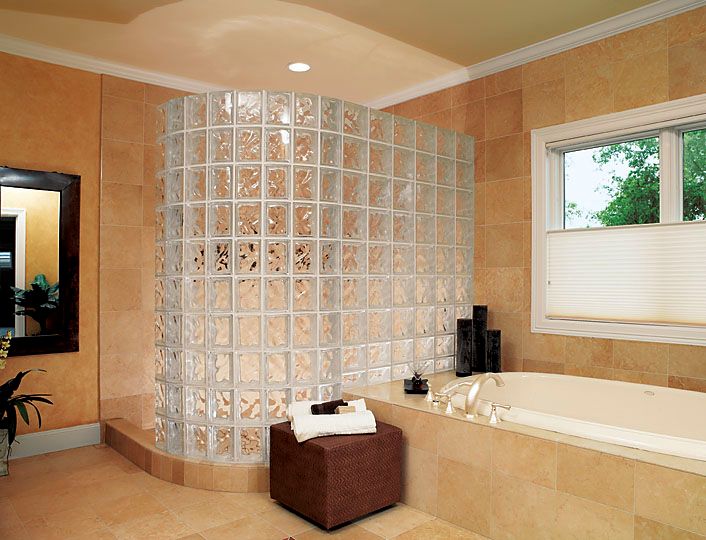
Glass block shower kits work for simple layouts, and custom glass block shower walls are the right pick when the bathroom has specific size, privacy, base, curb, or design needs. The right call depends on the shower footprint, the existing plumbing, and how much control you want over the finished look. A measured plan is the easiest way to choose between a kit and a custom wall.
What comes in a glass block shower kit?
A glass block shower kit usually includes a stack of blocks or pre-built panels, spacer rods or channel sections, and basic installation materials. The exact contents vary by manufacturer, and most kits assume the bathroom already has a compatible base, drain, and water-managed substrate.
A kit is a product. A finished shower wall is a system that includes the base, curb, membrane, drain, and panel.
What a typical kit includes:
- Glass blocks or pre-bonded panel sections in a stock size
- Spacers or assembly channels between blocks
- Basic mortar or silicone material
- Printed instructions for a single layout
- Limited or no privacy-pattern options
What a kit usually does not include:
- A water-management membrane on the floor and curb
- A pre-sloped base or drain assembly
- Custom sizing for the actual shower footprint
- Tile transitions to the surrounding bathroom
- Professional installation labor
When does a kit work?
A kit fits standard layouts where the measurements match the kit dimensions and the installer is experienced with shower water-management. Custom is the right pick for older Ohio bathrooms where the footprint was originally framed for a tub.
A new-construction bathroom built around a standard alcove is the closest fit for a kit. A vintage bathroom converting from a tub to a walk-in shower benefits from custom planning.
Where a kit fits:
- New construction with a standard alcove footprint
- Replacement that matches the previous shower size
- Bathrooms where water-management is already handled by another trade
- Single straight wall with no curves, returns, or partitions
- Owners or contractors comfortable with kit-only patterns
Even with a kit, the base, the curb, and the wall transitions are part of careful planning.
Why do custom glass block shower walls fit better?
Custom shower walls are planned around the actual bathroom dimensions, so the layout serves the room. That control matters most for layout, privacy partitions, curves, and how the wall meets the ceiling.
A custom wall can return at any angle, step up or down, and finish at a height that suits the room. Custom design adds layout flexibility on top of the kit format.
What custom planning gets you:
- Exact dimensions matched to the existing bathroom
- Curved walls where a kit would force a corner
- Privacy placement based on the door swing and shower head position
- Returns and openings sized for the layout, not the kit
- Pattern and height choices coordinated to the rest of the bathroom
The shower walls page is the right service link for this project.
How do base, curb, and water-management details affect the job?
The base, curb, and water-management are what make the shower last. A glass block wall is only as good as the floor it sits on and the membrane behind it.
A custom build usually starts with a sloped, water-managed base, a tiled or solid-surface curb, and a continuous membrane that wraps from the floor up the wall. The glass block panels sit on top of that system, not under it.
What the install plan should cover:
- Pre-sloped base poured to the drain
- Waterproof membrane on the floor and up the wall
- Curb height that contains shower spray
- Anchor points where the wall meets the ceiling or adjacent surfaces
- Drain assembly compatible with the membrane
These details should be designed before the first block is set, not adjusted on the fly.
What design options are available?
Custom glass block shower walls can be straight, curved, partial, full-height, or stepped. Pattern, height, and return choices balance light, privacy, and entry width.
A wave-pattern straight partial-height wall creates a different feel than a curved decora wall to the ceiling. Both can be built; the design conversation usually starts with the door layout and the shower head location.
Common configurations:
- Straight full-height wall as a privacy partition
- Curved walk-in entry that replaces a shower door
- Step-up wall that lets light over the top
- Side privacy wall with an open shoulder return
- Pattern-mixed wall (clearer at the top, denser at the base)
Use the shower walls design guide for design references.
When should a homeowner request a custom quote?
Request a custom quote when the shower is part of a remodel, the space is non-standard, or the finished design matters as much as the function. A measured plan delivers the right fit for the bathroom.
If the bathroom is being demoed and reframed, custom is almost always the right answer. The cost difference between custom and a kit narrows when the rest of the bathroom is already in motion.
Triggers that usually call for custom:
- Whole-bathroom remodel with new tile and fixtures
- Tub-to-shower conversion in an older Ohio bathroom
- A second-floor bathroom with a non-standard footprint
- A primary bath where layout and design drive the project
- Any bathroom where a privacy partition is replacing a glass door
A custom quote should make the design practical, not just attractive.
What does install day look like for a custom wall?
A custom glass block shower wall is sequenced across the base, membrane, and panel. The estimate explains demolition, base and membrane work, panel installation, mortar cure, and tile or finish work.
Coordination with a tile contractor or a general contractor is normal on a remodel, and the schedule reflects how those trades stack up.
What the schedule usually looks like:
- Demolition and base prep
- Water-management membrane and curb
- Glass block panel installation and mortar cure
- Tile or finish work in coordination with another trade
- Walkthrough and protection removal
The estimator can confirm the schedule and the trade hand-offs during the quote.
Frequently Asked Questions
Are glass block shower kits DIY friendly?
Some are marketed that way, and water-management and layout matter. A professional install handles the base, membrane, and panel as one continuous system.
Can a custom shower wall be curved?
Yes. Curved walls are one of the most common reasons homeowners pick custom over a kit, especially for walk-in entries.
Do glass block shower walls need a door?
Not always. Some walk-in layouts use the wall itself as a splash and privacy barrier, so the entry stays open without a door.
Can glass block match an existing bathroom style?
Usually yes. Pattern, height, and layout choices can make the wall feel intentional rather than added on.
Get a Free Estimate from Glass Block HQ
If you are deciding between a glass block shower kit and a custom shower wall, a measured estimate answers the practical questions fast. Glass Block HQ can review the bathroom layout, the base and curb plan, and the design options before you decide. Start at /get-a-quote/ and request a free estimate.