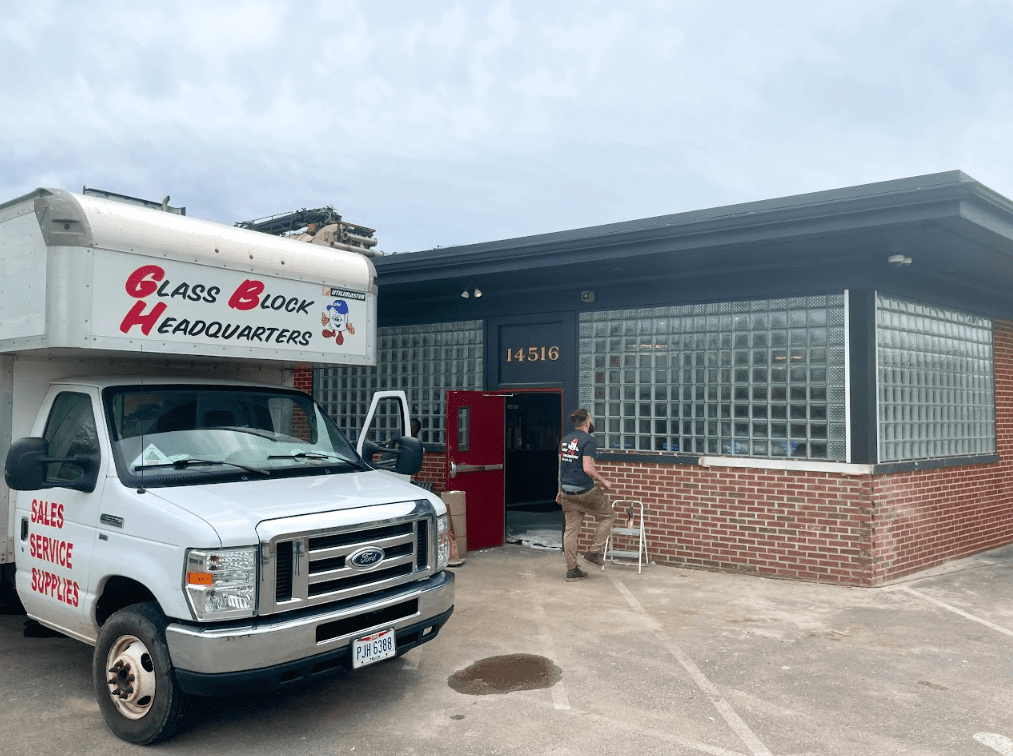
Commercial glass block windows can support forced-entry resistance, privacy, daylight, and lower-maintenance goals in Ohio buildings. They are useful where a property needs natural light through an exterior wall without keeping an older commercial sash in service.
Where do commercial glass block windows make sense?
Commercial glass block windows make sense in buildings that need durable daylight, privacy, and forced-entry resistance on exterior openings. They are common in utility areas, mechanical rooms, industrial spaces, storefront side walls, stairwells, and older masonry buildings where the original sash windows are ready for an upgrade.
A commercial property with older steel basement windows or aging first-floor sash glass is the most common candidate. The glass block panel removes the moving parts and adds a fixed, mortar-set assembly.
Common building types that use commercial glass block:
- Warehouses with ground-level windows along an alley or yard
- Multi-tenant commercial buildings with shared corridors
- Light-industrial workshops and machine shops
- Commercial bathrooms or locker rooms
- Stairwells and service corridors with code-required daylight
The commercial windows page is the primary service link for this topic.
How does glass block support forced-entry resistance at a commercial property?
Glass block supports forced-entry resistance by replacing older commercial glass and frames with a fixed, thick, masonry-set panel. The opening admits daylight while adding a sturdy assembly at the wall.
The panel is fixed. There is no operable hardware on the outside, and the mortar-set perimeter holds the assembly to the wall.
Forced-entry resistance factors a property manager can weigh:
- No operable sash on the exterior
- Thick masonry-style block units
- Mortar-set perimeter on all four sides
- Privacy patterns that obscure the inside view
- Low-hardware design with simple long-term care
Forced-entry resistance is the result of mortar-set installation paired with the block itself.
Can commercial glass block include vents?
Yes. Commercial glass block windows can include hopper vents, slider vents, or dryer vent blocks where the room use needs airflow. The vent type should match the room and the privacy or access-control goals.
A mechanical room often needs makeup air. A commercial bathroom may benefit from a small hopper near the ceiling. A warehouse breakroom may need a dryer vent block if the building has on-site laundry.
Vent options on a commercial scope:
- Hopper vent for mechanical or boiler room makeup air
- Slider vent in shorter panels with limited height
- Dryer vent block where on-site laundry exhausts to the exterior
- Combined-vent panel where airflow and dryer exhaust both apply
- No vent in storage or archive rooms where humidity must stay low
Not every commercial opening should include a vent. The room use decides.
What buildings benefit most from glass block conversion?
Buildings with older, high-maintenance windows benefit most from a glass block conversion. Glass block also helps where privacy and natural light are both required at the same opening.
A property with a long row of single-pane basement windows along a public alley is a textbook candidate. A row of mortar-set glass block panels delivers privacy, forced-entry resistance, and lower maintenance at once.
Where the conversion pays off fastest:
- Older masonry buildings with single-pane sash windows
- Ground-level windows visible from a public alley or sidewalk
- Multi-unit buildings where corridors share exterior windows
- Restrooms and locker rooms that need privacy plus daylight
- Industrial work areas where a fixed, sturdy panel is preferred
A property manager can walk every opening and group them by use case before quoting.
How does commercial installation differ from residential work?
Commercial installation usually involves larger openings, more access planning, more scheduling around tenants or operations, and different safety requirements. The basic quality rules still apply, but the logistics are heavier.
A 12-window commercial install at a tenant-occupied property is a different scope than a 5-window residential basement. The crew, the staging, and the schedule all change.
Logistics that show up on a commercial scope:
- Tenant or business hour coordination
- Staged work across multiple days or shifts
- Lift, scaffold, or access equipment for upper-floor openings
- Debris control and dust protection inside occupied space
- Approval flow with property managers, not just owners
The estimate should include logistics, not just materials.
What should property managers ask before quoting?
Property managers should ask about schedule, access, certificate of insurance requirements, opening count, vent requirements, debris control, and how disruption will be managed during the install. Clear planning helps reduce disruption to the building operation and the tenants.
A good commercial estimate is closer to a project plan than a residential quote. It identifies the openings, the install method, the access plan, and the day-by-day schedule.
Specific questions for the bidder:
- Number and size of openings at each elevation
- Building access hours and any after-hours options
- Vent or privacy needs by room use
- Debris disposal plan and dust protection inside occupied space
- Single point of contact for change orders and approvals
A commercial quote should make the project predictable for both the owner and the occupants.
What does a commercial install timeline look like?
A multi-window commercial install usually runs across several days. The crew sequences the openings by elevation, sets the panels in groups, and cycles through demolition, panel set, perimeter mortar, and cleanup at each station.
The total schedule depends on the number of openings, the access method, and how much of the work must happen outside business hours.
A typical commercial sequence:
- Day 1: site walk, staging, and protection setup
- Day 2-N: demolition and panel set, grouped by elevation
- Daily: perimeter mortar and cleanup at each completed opening
- Final day: walkthrough, punch list, and protection removal
- Post-install: written care notes and maintenance handoff
The estimator can confirm the schedule and any after-hours needs during the quote.
How does long-term maintenance compare to standard commercial sash?
Long-term maintenance on commercial glass block is much lighter than on a standard wood or aluminum sash. There is no paint to refresh, no weatherstripping to replace, no balance hardware to service, and no glazing putty to redo. The mortar joints between blocks and the perimeter sealant are the items that benefit from periodic inspection.
Most properties only need an annual visual check and a routine cleaning. A property maintenance team can wipe the block face with a non-abrasive cleaner, look at the mortar joints, and confirm any vent screens are intact.
Annual commercial maintenance checklist:
- Wipe the interior and exterior block face
- Inspect mortar joints on all four sides
- Confirm any vent louvers or hopper latches still operate
- Check the exterior sealant where mortar meets siding or trim
- Glance at the sill during routine cleaning
A clean walkthrough every spring keeps the assembly in great shape.
What should be confirmed before scheduling?
Before scheduling, confirm the project as an access and logistics plan, not just a window order. Commercial buildings often have tenant hours, delivery areas, security procedures, parking limits, and occupied interior spaces that affect how the work is staged. The estimate should name those constraints instead of assuming the crew can work the same way it would in a residential basement.
Start with the opening list. Group windows by size, floor, room use, vent need, and access method. A restroom opening, stairwell opening, mechanical-room opening, and alley-facing opening may all need different planning. If the building needs airflow, ask which openings get vents and why. If privacy is the priority, ask which pattern is being recommended.
Then confirm what happens after installation. Property managers should know how the finished panels are cleaned, how vent screens are checked, who receives care notes, and how any punch-list items are handled. Those details keep the project organized for the owner, tenants, and maintenance team.
Ask for the final opening list and schedule assumptions in writing before work is scheduled.
Keep that with the project file.
Frequently Asked Questions
Can commercial glass block be installed after hours?
After-hours installation depends on the project, the crew, and the building access plan. Mention any business-disruption concerns during the estimate so the schedule can be planned around them.
Is glass block appropriate for storefront display windows?
Glass block is best suited to privacy, forced-entry resistance, and diffused light. For clear product visibility, a standard storefront window is the right pick.
Can glass block be used inside commercial buildings?
Yes. Interior partitions, privacy walls, and stairwell daylight panels are all possible depending on the project and the building code requirements.
Do commercial projects need permits?
Some do, depending on the scope and the local jurisdiction. The estimator can review permit needs before work starts.
Get a Free Estimate from Glass Block HQ
If you are planning a commercial glass block install, a measured estimate answers the practical questions fast. Glass Block HQ can review the openings, the access plan, the vent options, and the schedule before you make a decision. Start at /get-a-quote/ and request a free estimate.