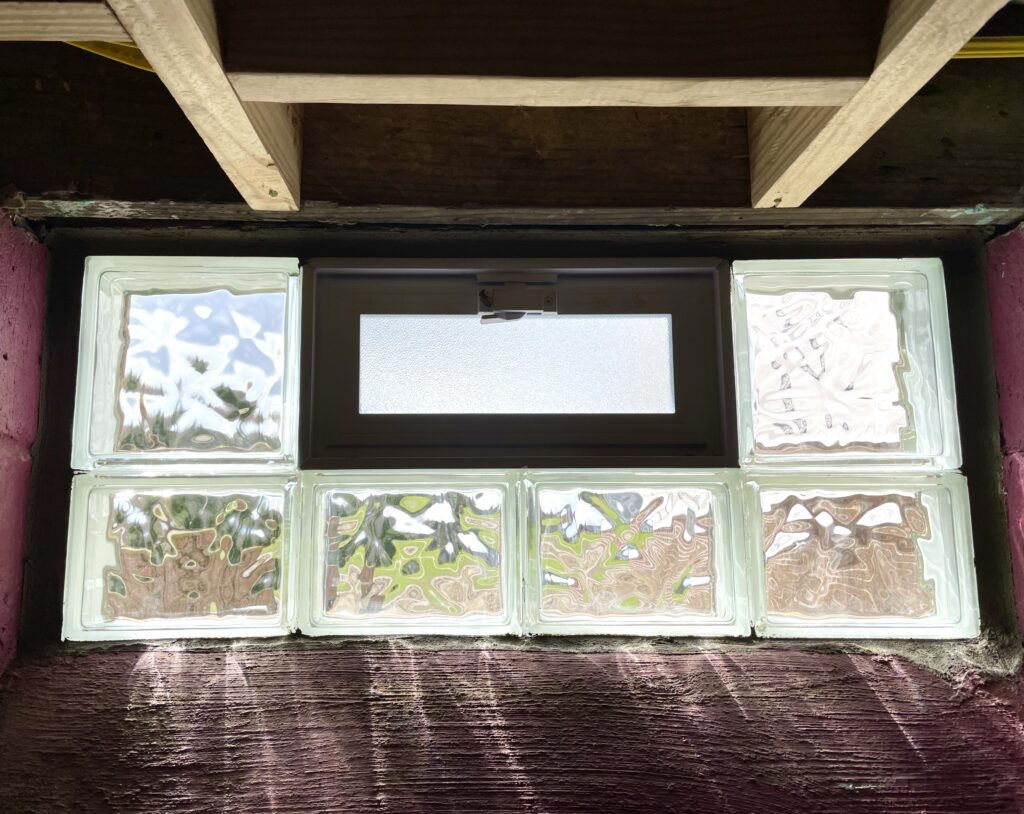
A dryer vent glass block window uses a dedicated louvered vent block so a basement dryer can exhaust through a glass block panel instead of a separate hole in the wall. It is a practical option when a basement laundry sits next to a window opening and you want privacy, forced-entry resistance, and a cleaner dryer duct path in one project.
What is a dryer vent glass block window?
A dryer vent glass block window is a glass block panel built with a louvered dryer-exhaust block in place of one or more standard blocks. The dryer duct connects to the louver from inside the room, and warm air exhausts straight outside.
The vent block is sized to standard residential dryer ducts. The louver opens with airflow and falls shut when the dryer cycle ends, which keeps cold air and insects out of the basement.
Standard parts of the assembly:
- Louvered dryer vent block sized for the dryer duct
- Hood or storm cap on the exterior side
- Mortar-set perimeter around the full panel
- Optional separate hopper vent for room airflow
- Compatible duct fitting on the interior
The glass block panel around the vent stays fixed and private.
Can a dryer vent be built into glass block?
Yes. A dryer vent can be built into a glass block window when the opening fits the vent block within a structurally sound layout. The installer measures the opening, the dryer location, and the existing duct route before designing the panel.
The louvered block sits surrounded by glass block on all sides for a strong, finished assembly. Smaller openings can use a custom layout designed around the vent.
Measurements the installer collects:
- Inside width and height of the opening
- Wall thickness from interior face to exterior face
- Distance from the dryer to the vent location
- Existing duct diameter
- Exterior obstructions (siding, soffit, downspout, deck)
The goal is a vent that lines up with the duct and still leaves a strong glass block panel around it.
When is a dryer vent better than a standard hopper vent?
A dryer vent block is the right choice when the opening exhausts a clothes dryer. A hopper vent moves room air; a dryer vent block moves heated, humid dryer exhaust through a sealed louver. They are designed for different jobs.
A laundry basement that currently runs the dryer through a flex duct out a basement window is the classic candidate for a dedicated dryer vent block. The dedicated louver gives the dryer a clean, weather-sealed path to the exterior.
Pick a dryer vent block when:
- The dryer currently exhausts through a basement window
- The duct route is shorter through the window than through the rim joist
- The existing window has been modified for the duct
- The room also benefits from privacy and forced-entry resistance when the dryer is off
- The existing window is showing age and is ready for an upgrade
A general airflow vent is paired with the dryer vent block when both jobs apply.
What measurements does the installer need?
The installer needs the window opening, wall thickness, dryer location, duct path, and exterior clearance. Photos help the first call, and final measurements drive the panel design.
Good measurements support a clean duct run with steady airflow.
What to capture before the visit:
- Inside width and height of the rough opening
- Wall thickness (basement walls are often thicker than upper-floor walls)
- Dryer-to-window distance and any bends in between
- Existing duct material (rigid metal or flex)
- Photos of the exterior wall around the window
Plan the duct path while the panel is being designed for the cleanest result.
Can an old glass block vent be upgraded to a dryer vent block?
An older hopper vent or slider vent can often be replaced with a dryer vent block, and in some cases a fresh panel is the easier upgrade. The installer reviews the existing blocks, mortar joints, and opening before recommending the path.
When the existing panel is in solid shape, a vent swap is straightforward. When the panel is showing age, a fresh mortar-set panel is the cleaner upgrade.
Installer inspection points:
- Current vent size and frame condition
- Block pattern around the vent
- Mortar joint condition
- Dryer duct alignment relative to the existing vent
- Air sealing around the old vent
Those details decide whether the panel you have can take a dryer vent block or whether it comes out.
How does a clean install handle airflow and maintenance?
A clean install plans for airflow first and maintenance second. Good duct routing, the right vent hardware, sealed connections, and easy-to-clean bends all support steady dryer performance.
A glass block dryer vent is designed to make the laundry routine simple, with a clean exhaust path and an easy-to-service louver.
What a clean install includes:
- A short, direct duct run with smooth-flow fittings
- Rigid metal or smooth-wall flex between the dryer and the vent block
- Sealed connection at the vent block
- Clear exterior clearance around the louver hood
- Easy disconnect for annual cleaning
A glass block dryer vent keeps the laundry cleaner and easier to maintain.
What does install day look like?
Installation is typically a single visit. The crew protects the floor, removes the old window or frame, preps the masonry, sets the panel with the dryer vent block in the planned position, mortar-sets the perimeter, connects the dryer duct, and cleans up.
Clear access in front of the dryer and the window before the crew arrives.
What homeowners can do beforehand:
- Move the dryer away from the wall
- Disconnect the existing duct from the dryer
- Clear stored items from the work zone
- Note any landscaping or downspouts the crew should account for outside
- Confirm the duct material the crew will reconnect to
The estimator can confirm the day-of details when the quote is approved.
Frequently Asked Questions
Can a dryer vent glass block window include a hopper vent too?
Sometimes, if the opening is large enough. The panel needs room for both inserts without weakening the layout. The installer confirms the fit during the measurement.
How does the dryer vent support privacy and forced-entry resistance?
The louvered vent is a small opening, and the mortar-set perimeter holds the surrounding blocks as one solid panel. Ask how the louver is anchored and how the exterior hood is finished.
Can a dryer vent block be used in a bathroom window?
Dryer vent blocks are designed for clothes-dryer exhaust. For bathroom airflow, a hopper vent or a separate exhaust fan is the right pick.
Do I need to move my dryer before installation?
You should clear a few feet of working space around the dryer and the window. The estimator can tell you exactly what to move before the crew arrives.
Get a Free Estimate from Glass Block HQ
If you are replacing an old basement window or planning a new dryer vent glass block window, a photo of the window and the duct is a useful start, and we confirm the route at the opening. Glass Block HQ can review the opening, the duct route, and the louver position before you make a decision. Start at /get-a-quote/ and request a free estimate.