
Installation method, vent options, real reviews, and a clear quote — the four questions that separate a good Ohio glass block installer from a bad one.
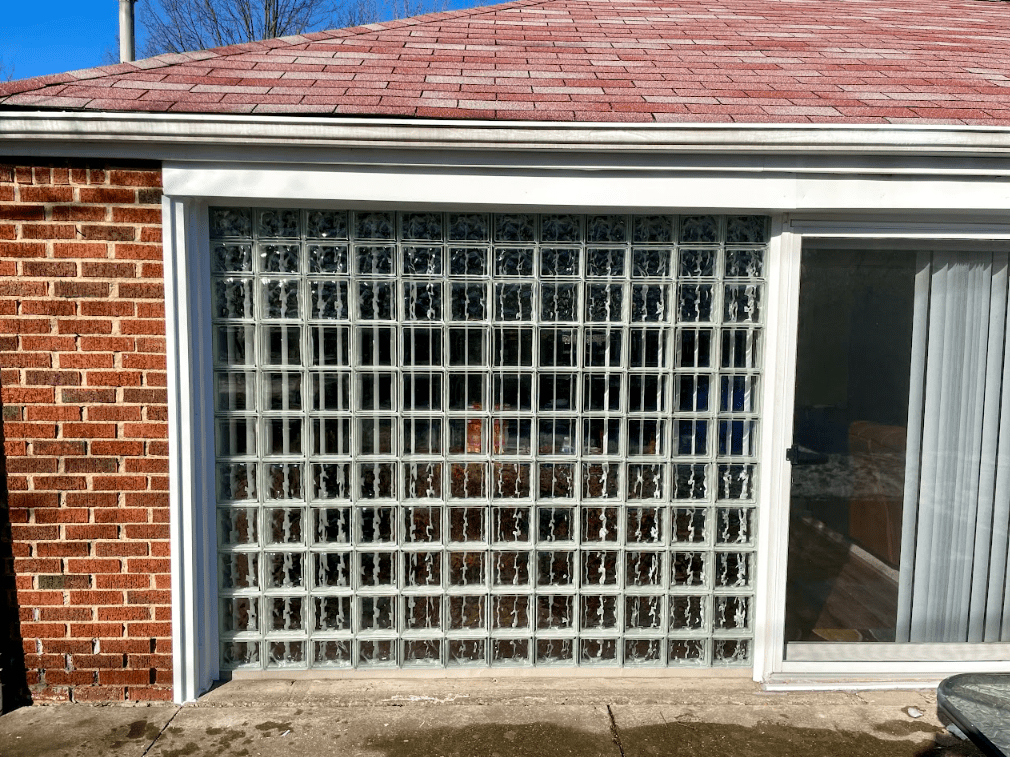
Searching for glass block window installers near me should lead you to a clear, complete quote. The right installer explains the installation method, vent options, opening prep, perimeter seal, and cleanup.
What should a professional glass block installer do?
A professional glass block installer measures accurately, handles the old frame, sets the panel correctly, mortar-sets the perimeter, and cleans the work area. The job is part masonry, part window work, and part moisture control on the same opening.
A mortar-set perimeter is the hallmark of a complete, lasting install. If your home already has glass block with cracked blocks or failing joints, our glass block window repair vs. replacement guide explains what a careful installer will assess first.
Standard scope of work for a quality install:
- On-site measurement of every opening
- Steel, wood, or vinyl frame handling
- Mortar-set perimeter on all four sides
- Hopper, slider, or dryer vent installation if specified
- Final walkthrough with the homeowner
The clearest sign of quality is a clean, square panel with tooled mortar joints visible from inside the room.
What is the difference between panel assembly and perimeter installation?
Panel assembly is how the glass blocks and the vent are arranged into a finished window. Perimeter installation is how that panel is anchored and sealed into your wall. Both matter, and a strong perimeter is what makes a panel feel solid for the long term.
A prefabricated panel from a supplier comes assembled. The perimeter is the craftsmanship your installer brings.
What a strong perimeter includes:
- Tooled mortar joint on the head, jambs, and sill
- Backer rod where the panel meets the masonry
- Clean joint with no exposed filler material
- Compatible sealant where mortar transitions to siding or trim
- Clean exterior face
Ask the installer to show a finished install, ideally inside an Ohio basement of similar age to yours.
What questions should you ask before hiring?
Ask questions that reveal how the installer handles real Ohio basement and bathroom conditions. Specific answers help you compare quotes side by side.
Specific, useful questions to ask:
- How do you handle an older steel basement frame?
- Do you mortar-set the perimeter?
- What vent options fit my opening?
- What is included in cleanup and old-frame handling?
- What written documentation comes with the installation?
Write the answers down. The clearest answers are the easiest quotes to compare.
How do you compare quotes?
Compare quotes by scope, materials, method, and included work. A complete scope makes the comparison clear.
Two quotes for the same window can have different totals when one includes mortar-set perimeter and frame handling and the other includes a different approach. Read the line items.
Apples-to-apples line items to look for:
- Number and size of openings on the quote
- Vent type and count per panel
- Installation method (mortar-set is the lasting standard)
- Old frame handling and exterior cleanup
- Payment schedule
The clearest quote is the easiest one to trust. Our guide to glass block window cost in Ohio walks through the factors behind those line items.
What are signs of quality?
Signs of quality include on-site measurement, a clear method explanation, a mortar-set perimeter, and a written scope. These details point to an installer who plans the project carefully.
A patient sales process is another sign of quality. The installer is happy to answer questions and walk through the scope before any decision.
Specific signs of quality:
- A measured visit to confirm dimensions
- Mortar-set perimeter as the standard installation method
- A clear plan for the old frame
- Written cleanup detail in the scope
- Time to review the quote before signing
Quality comes from a careful install with clean, mortar-set joints.
Why does local Ohio experience matter?
Local experience matters because Ohio basements deal with freeze-thaw movement, older block foundations, vintage steel buck frames, and humidity that varies by neighborhood. An installer who has worked in Cleveland, Akron, Columbus, Cincinnati, Dayton, Toledo, or Youngstown has seen the patterns.
A quick test: ask the installer to describe what they typically find when handling an older steel basement frame. The answer reflects their hands-on experience. Our guide to replacing basement windows with glass block shows what that frame removal involves.
What local experience usually catches:
- Steel buck frames cast into the original masonry
- Block foundations versus poured walls and what that means for the panel
- Basement humidity differences between Ohio cities
- Common older window sizes and panel-fit tolerances
- Winter scheduling and exterior masonry temperature considerations
The best local installer can describe what is normal for homes like yours before you ask.
What does Glass Block HQ include in every install?
A complete Glass Block HQ estimate describes on-site measurement, old-frame handling, perimeter installation, vent installation if specified, and exterior cleanup. The schedule reflects the number of openings, access, vent choices, and opening condition.
The mortar-set perimeter is the differentiator that keeps the panel and the wall behaving as one piece across Ohio winters. The mortar vs. silicone guide explains why that detail matters more than the panel itself. For business properties, our commercial glass block windows in Ohio guide covers privacy, daylight, and scheduling for occupied buildings.
Frequently Asked Questions
Should I choose a glass block installer based on price alone?
Compare the full scope. Confirm the quote includes frame handling, mortar-set perimeter, vents if needed, and exterior cleanup before comparing prices.
Can installers quote from photos alone?
Photos help the first call, and measurements decide the final scope. A site visit is usually the fastest path to an accurate price.
Do installers handle bathroom and basement windows on the same visit?
Most do. Bathroom installs add wet-area details, so mention the room use during the estimate so the crew brings the right pattern and water-management materials.
How soon should I request a quote?
Request a quote at your convenience, especially before related remodeling starts. Earlier scheduling makes coordination with other trades easier.
Get a Free Estimate from Glass Block HQ
If you are comparing glass block window installers in Ohio, a measured estimate from Glass Block HQ answers the practical questions fast. The estimator can walk through the openings, the installation method, vent options, and the written scope before you make a decision. Start at /get-a-quote/ and request a free estimate.