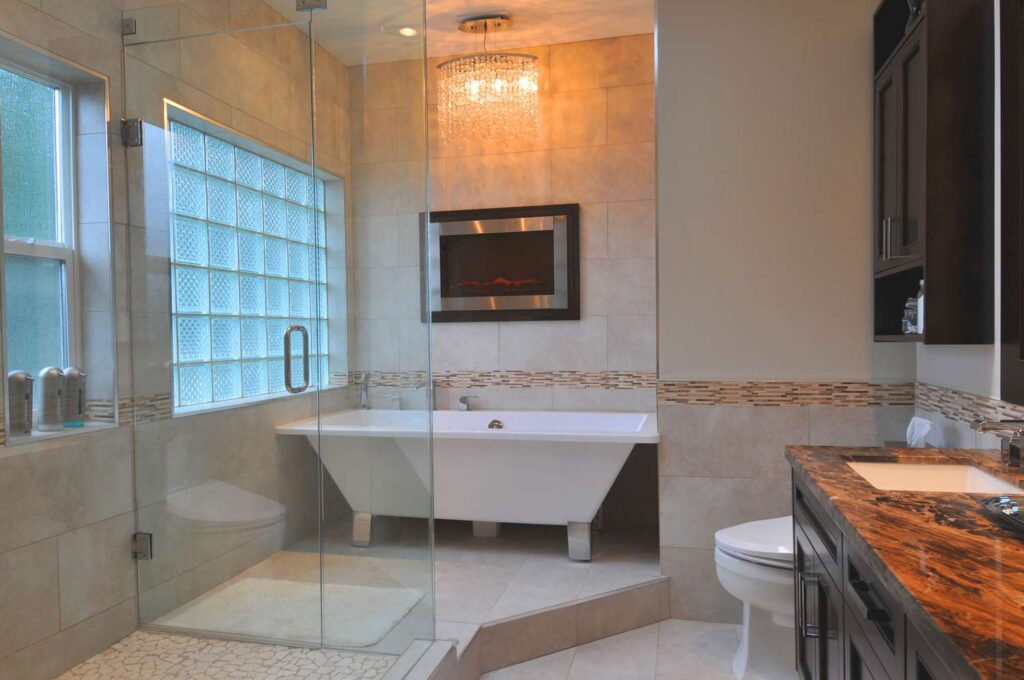
A glass block window inside a shower can add privacy, daylight, and moisture resistance when it is installed correctly. The job depends on water-management at the opening, choosing the right privacy pattern, deciding whether the room also needs a vent, and tying the panel into the surrounding tile.
Is glass block good for a window inside a shower?
Yes. Glass block works well for a shower window because the panel is solid, fixed, and moisture-tolerant. The perimeter is the system around it, with water-management on both sides for a complete install.
A clean shower window install starts with sound substrate behind the panel, so any older framing is refreshed before the new panel is set.
What a shower window install includes:
- Handling of the existing window frame and any older substrate
- Water-management membrane wrapping into the rough opening
- Mortar-set perimeter around the glass block panel
- Tile transition planned with the bathroom contractor
- Sloped sill detail to direct water back into the shower
Glass block is the panel. The water-management is the system around it.
Which patterns provide privacy?
Privacy patterns diffuse the view from outside while still letting natural light into the bathroom. The right pattern depends on how close the window is to neighbors, walkways, or driveways.
Wave and decora patterns are the most common bathroom picks. Wave gives a softer look with strong daylight, and decora gives the highest privacy at the cost of some light transmission.
Common pattern picks for bathrooms:
- Wave: balanced privacy with strong daylight, common for second-floor baths
- Frost or icescape: stronger privacy, common when the window faces a walkway
- Decora: highest privacy, common at ground-level bathrooms
- Mixed pattern: a clearer top course with a denser bottom course
- Custom: panel-by-panel pattern coordination if the room has multiple openings
The bathroom privacy guide covers pattern choice in more detail.
How should a shower window be detailed for water?
A shower window is treated as a wet-area opening. Water from inside the shower and weather from outside are both managed, and the rough opening is wrapped before the panel goes in.
A complete water-management plan keeps the wet-area system working as one piece with the glass block panel.
Waterproofing details to confirm at the quote:
- Slope at the sill toward the inside of the shower
- Waterproof membrane wrapped into the rough opening
- Tile or surround transition that extends past the opening
- A wrapped substrate where shower water can reach it
- Sealant compatible with mortar, membrane, and tile
A complete wet-area system makes the shower window install last.
Should a shower glass block window include a vent?
A small hopper vent can complement the room exhaust fan in a shower window. The vent sits above the spray zone and is easy to operate from outside the shower.
Plan the vent location around the shower head and the panel layout for the cleanest result.
Vent decisions for a shower window:
- Locate the vent above the spray zone, near the ceiling
- Pick a hopper vent that latches from the dry side of the wall
- Confirm the room exhaust fan is sized for the bathroom
- Pair the vent with the bathroom fan when both apply
- Plan a screen replacement path for future maintenance
A quality bathroom fan and a vented panel work well together.
Can glass block replace an old bathroom window?
Yes. Glass block can replace an older bathroom window, especially when privacy and moisture resistance are the goals. The old frame, the wall around it, and any tile are reviewed first.
An older wood-framed bathroom window often benefits from a complete refresh. The wall behind the trim is reviewed and prepped before the new panel goes in.
What the inspection covers:
- Older wood frame condition
- Tile or wall surround where it meets the existing trim
- Exterior trim and siding around the rough opening
- Inside-of-wall substrate the new panel will be set against
- Pattern and vent selection for the new panel
A measured estimate covers window and finish details together.
When should you choose a full shower wall instead?
Choose a full glass block shower wall when the goal is a larger design feature, not just a window swap. A shower wall changes the bathroom layout, replaces a curtain or door, and creates a privacy partition with diffused light.
A glass block shower wall is a different product than a glass block window. The base, the curb, the layout, and the water-management details are planned around the wall, not around an opening.
When a full shower wall fits the project:
- The bathroom is being remodeled, not just patched
- A walk-in shower is replacing a tub or curtain
- A privacy partition would replace a glass shower door
- Natural light should pass into the shower from a side window
- Curved or stepped wall designs would help the layout
The shower walls page and the design guide are the right next reads for that project.
What does install day look like for a shower window?
Shower window installation is typically a single visit for the panel set. The crew protects the bathroom floor, handles the old window and any older substrate, prepares the rough opening, sets the panel with mortar, and finishes the perimeter.
Tile work is scheduled separately so the membrane and panel can cure first.
What homeowners should expect on install day:
- Floor and fixture protection inside the bathroom
- Handling of the old window frame and trim
- Mortar-set panel installation with a tooled perimeter
- Coordination with a tile contractor for the surround
- Final cleanup of the bathroom and the exterior wall
The estimator can confirm the schedule and any tile coordination during the quote.
Frequently Asked Questions
Can a glass block window go directly into a tiled shower wall?
Yes, but the membrane and tile transition have to be planned together. The installer should coordinate with the tile contractor before either trade starts work.
Will a glass block window make the bathroom dark?
Usually no. The patterned blocks diffuse light while blocking the direct view, so a wave or icescape panel can pass more daylight than a frosted-glass window of the same size.
Can I open a glass block shower window?
Only if the panel includes a hopper or slider vent. Many shower windows are fixed for privacy and water control.
Is glass block hard to clean inside a shower?
The block face is easy to wipe with a non-abrasive cleaner. The mortar joints and tile transition need the same maintenance as any other wet-area surface.
Get a Free Estimate from Glass Block HQ
If you are planning a glass block window inside a shower or replacing an old bathroom window, a measured estimate answers the practical questions fast. Glass Block HQ can review the opening, the membrane plan, and the pattern options before you decide. Start at /get-a-quote/ and request a free estimate.